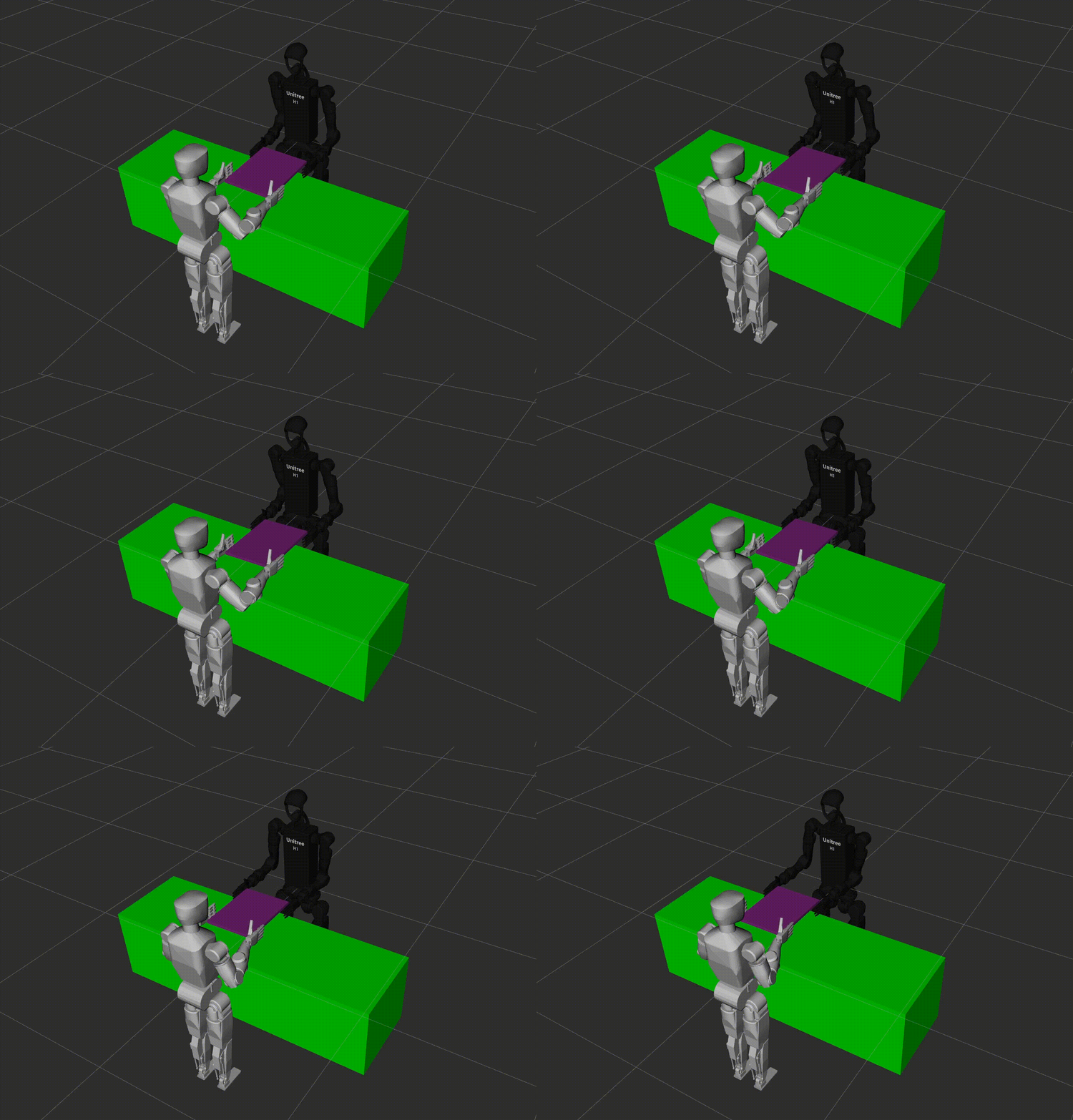
Video Summary
Abstract
This paper presents a motion planning framework that unifies equality and inequality constraints within a single geometric formulation for sampling-based planning in high- dimensional robotic systems. In conventional sampling-based planners, equality constraints are typically enforced through projection, whereas inequality constraints are handled separately through binary validity checks such as collision testing, often leading to inefficient exploration. To address this limitation, we propose Riemannian Barrier Metric RRT (RMRRT), which constructs a unified local geometry for planning on equality- constrained manifolds. RMRRT first builds an ambient barrier metric from inequality-sensitive barrier terms and then induces a tangent-space metric via a G-orthogonal projection associated with the equality constraints. The resulting tangent-space metric is used consistently in both steering and nearest-neighbor selection, biasing exploration away from nearby inequality boundaries while preserving first-order equality consistency. Experimental results show that RMRRT achieves a 100% success rate across diverse constrained manipulation tasks in both simulation and real-world settings, while reducing planning time relative to representative constrained planning baselines. Ablation studies further demonstrate that the proposed metric improves explo- ration quality by reducing rejected samples and shortening path length. Experiment videos and source code are available at: https://rmrrt-anonymous.github.io
Method Overview
RMRRT constructs a Riemannian barrier metric on the tangent space of the equality-constrained manifold that encodes the local geometry induced by inequality constraints. This metric is integrated into both steering and nearest-neighbor selection, enabling inequality-aware exploration while strictly maintaining equality-manifold feasibility.
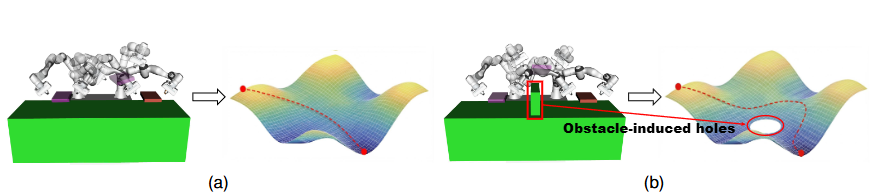
(a) Equality-constrained manifold under full admissibility. (b) The same manifold with infeasible regions (holes) induced by inequality constraints. RMRRT accounts for this geometry through a Riemannian metric defined on the tangent space.
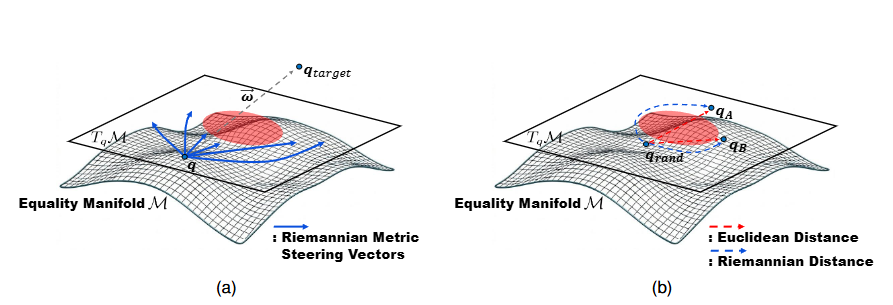
(a) Metric-induced tangent-space steering biases expansion away from inequality boundaries. (b) Riemannian nearest-neighbor selection favors nodes that admit feasible, low-cost motions toward the target.
Results
RMRRT achieves 100% success rate across all scenarios while maintaining the lowest mean planning time compared to five state-of-the-art baselines. Each scenario was evaluated over 100 trials with a 300s timeout.
| Planner | Scenario 1 | Scenario 2 | Scenario 3 | Scenario 4 | ||||
|---|---|---|---|---|---|---|---|---|
| Time (s) | Succ. (%) | Time (s) | Succ. (%) | Time (s) | Succ. (%) | Time (s) | Succ. (%) | |
| CBiRRT | 0.36 ± 0.54 | 100 | 2.97 ± 4.48 | 100 | 4.58 ± 9.20 | 100 | 74.75 ± 118.59 | 90 |
| Atlas RRT | 1.04 ± 2.65 | 100 | 3.87 ± 6.34 | 100 | 5.71 ± 9.27 | 100 | 42.11 ± 105.49 | 92 |
| Tangent Bundle RRT | 0.87 ± 3.34 | 100 | 3.03 ± 4.32 | 100 | 4.94 ± 10.11 | 100 | 15.80 ± 57.35 | 87 |
| Precomputed Graph RRT | 0.42 ± 0.69 | 100 | 2.72 ± 3.67 | 100 | 2.07 ± 3.29 | 100 | 13.34 ± 35.11 | 100 |
| LJCMP | 1.17 ± 3.30 | 100 | 0.28 ± 0.65 | 100 | 0.48 ± 1.56 | 100 | 0.55 ± 1.69 | 100 |
| RMRRT (ours) | 0.09 ± 0.14 | 100 | 0.23 ± 0.31 | 100 | 0.25 ± 0.26 | 100 | 0.31 ± 0.39 | 100 |
On the most challenging task (Scenario 4: 21-DoF triple-arm cooperative manipulation through a narrow passage), we further report the number of planning iterations required to reach a feasible solution over 100 independent randomized trials. RMRRT attains the lowest mean, median, and maximum iteration counts among all planners, and does so without any offline training. LJCMP's learned latent sampler, although sample-efficient on simpler scenarios, degrades on this hardest task and exhibits a heavy-tailed iteration count (up to 2774), whereas RMRRT remains low and stable.
| Planner | Mean iters | Median iters | Max iters | Offline training |
|---|---|---|---|---|
| RMRRT (ours) | 13.6 | 2 | 181 | none |
| LJCMP | 77.0 | 7 | 2774 | 263 s |
| CBiRRT | 59.1 | 28 | 237 | none |
Result Video
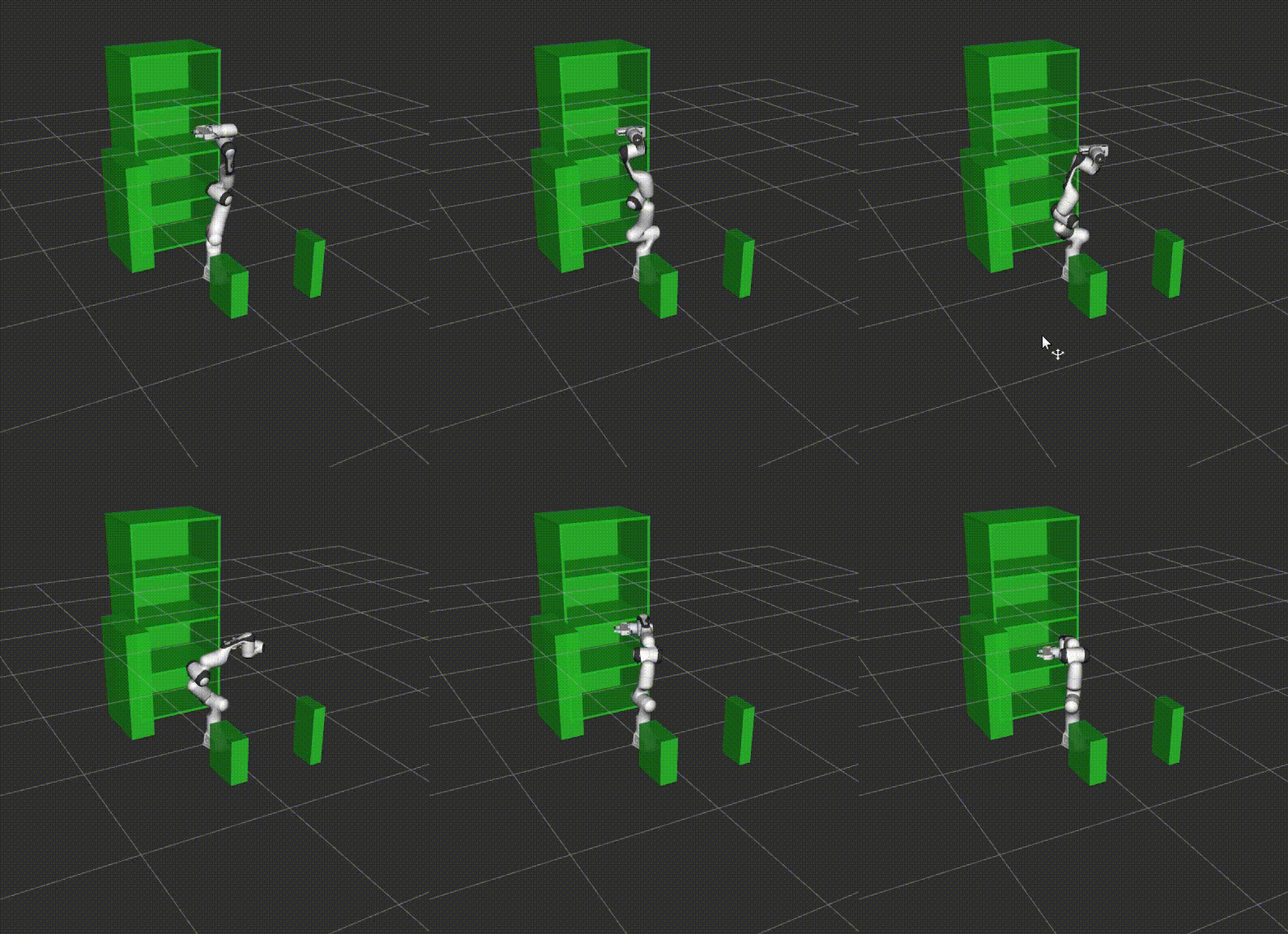
Single-arm cabinet reaching under a fixed end-effector orientation constraint (Scenario 1).
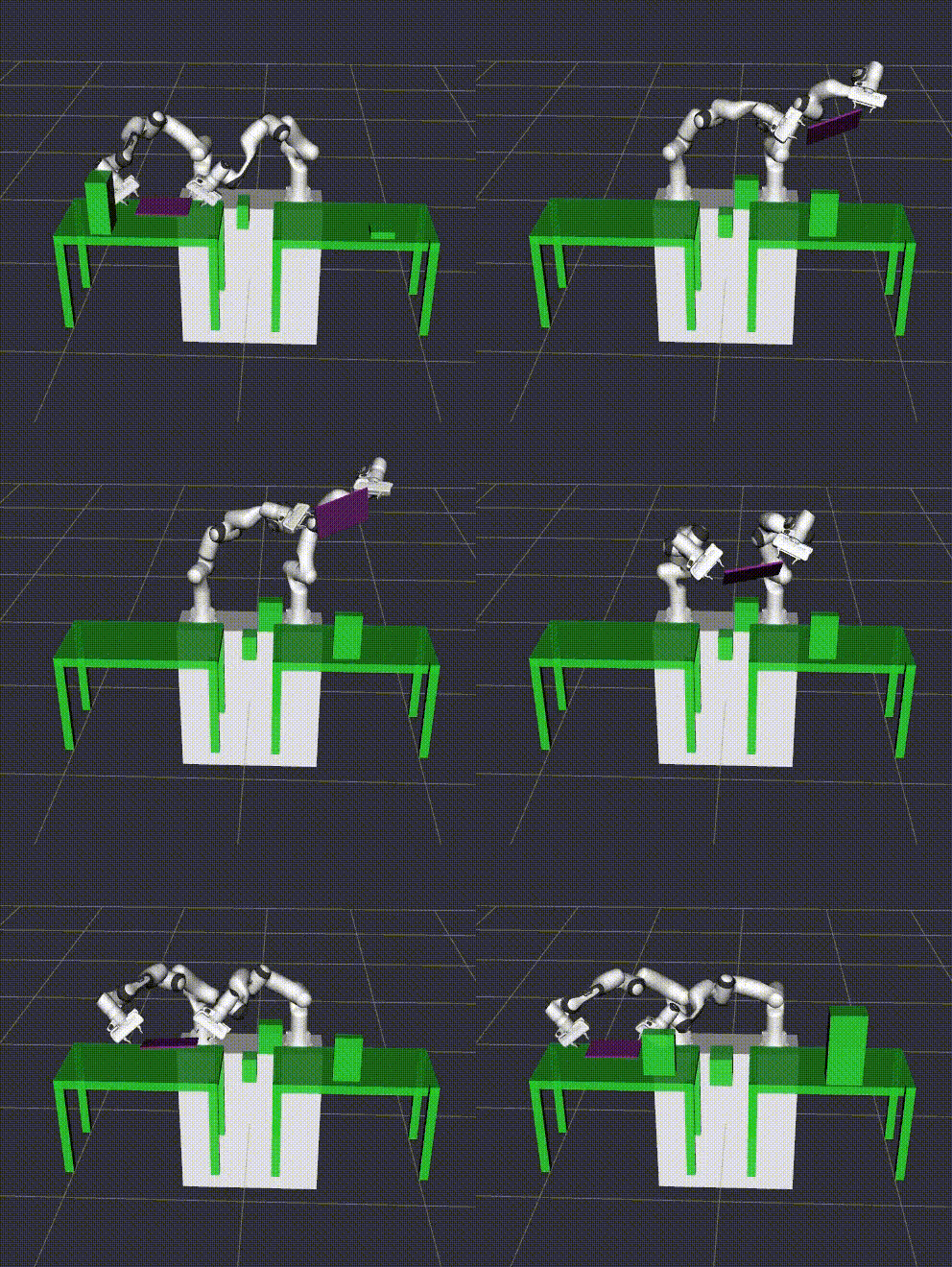
Dual-arm constrained transfer (Scenario 2).
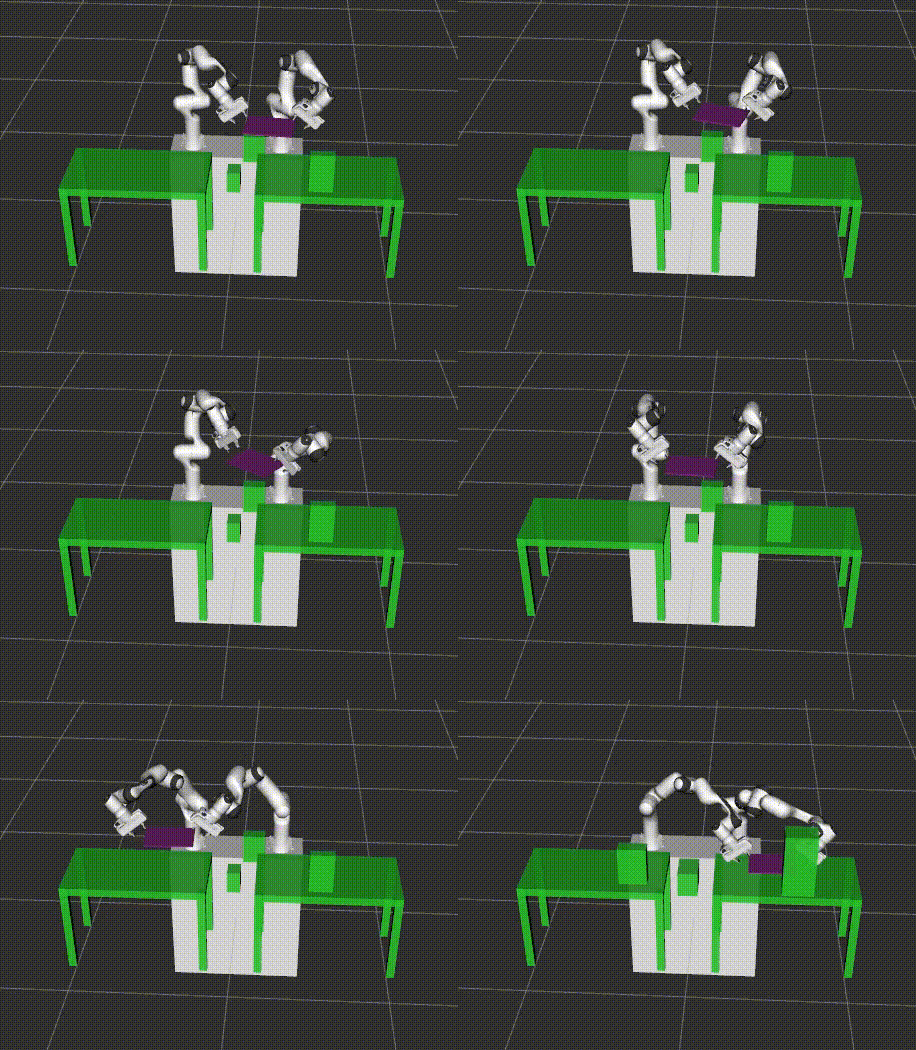
Dual-arm constrained transfer with a fixed orientation constraint (Scenario 3).
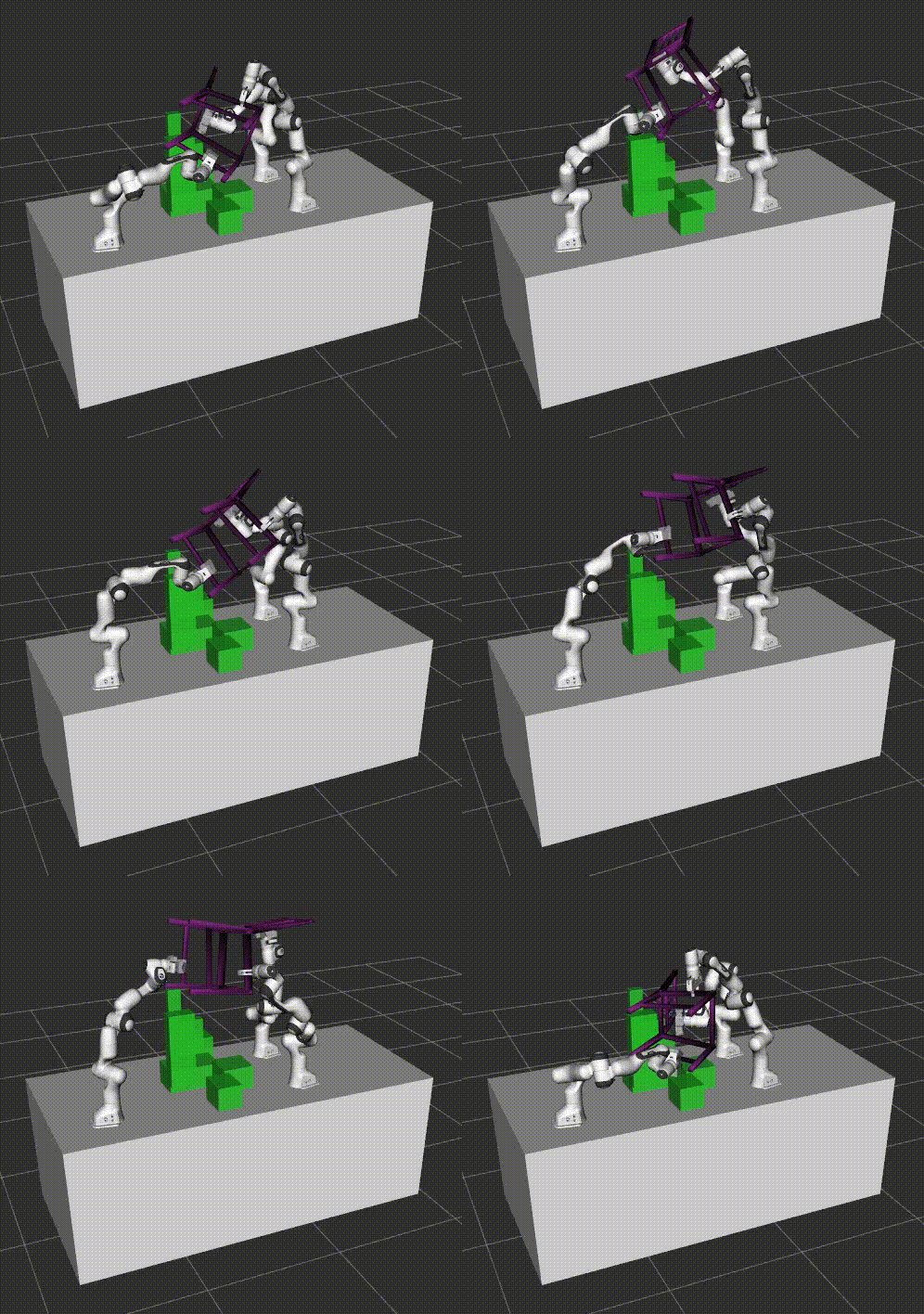
Triple-arm cooperative manipulation under closed-chain grasp and collision avoidance constraints (Scenario 4).
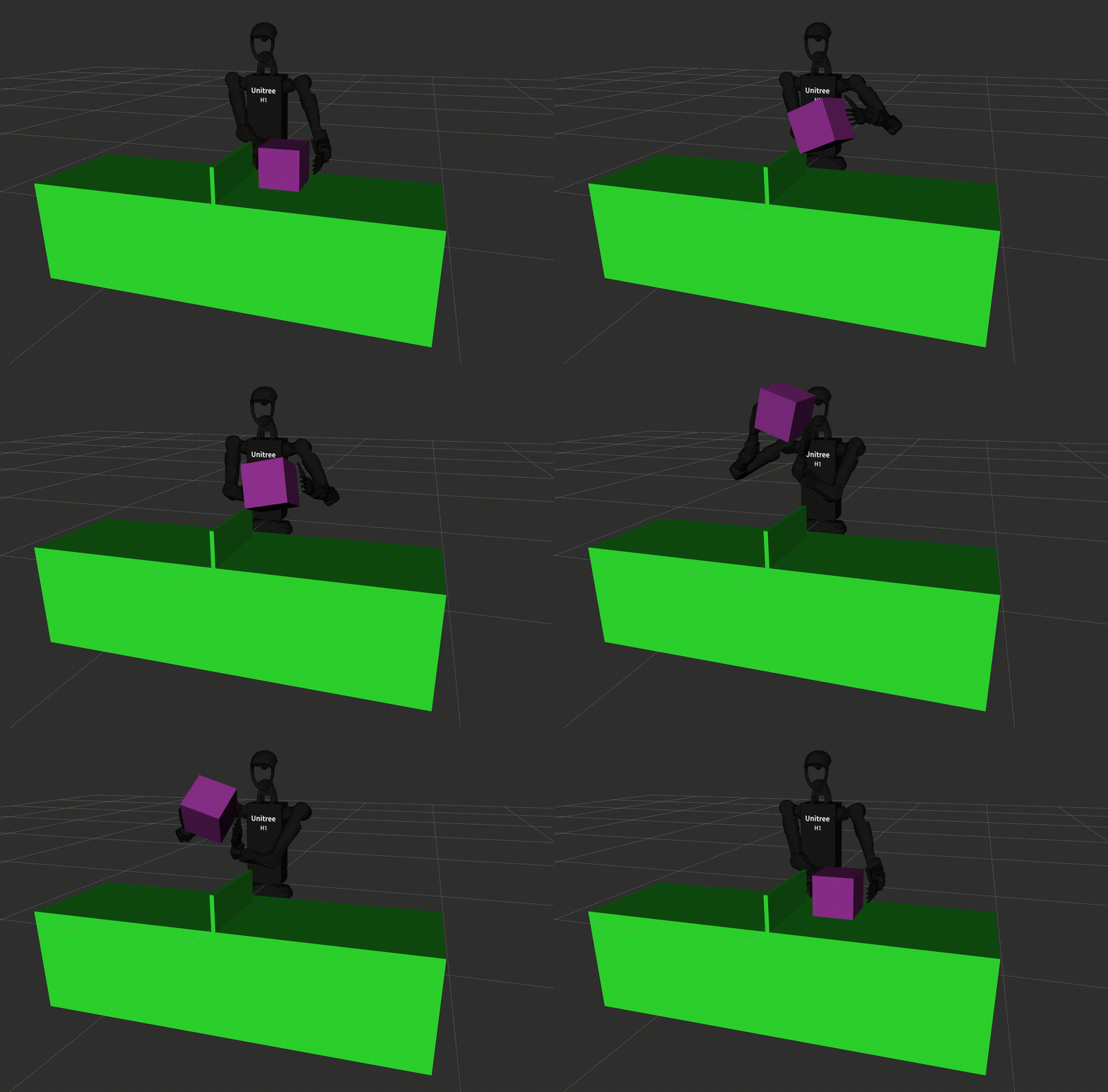
Unitree H1-2 humanoid dual-arm constrained transfer.